Zingerman’s Guide to Good Leading
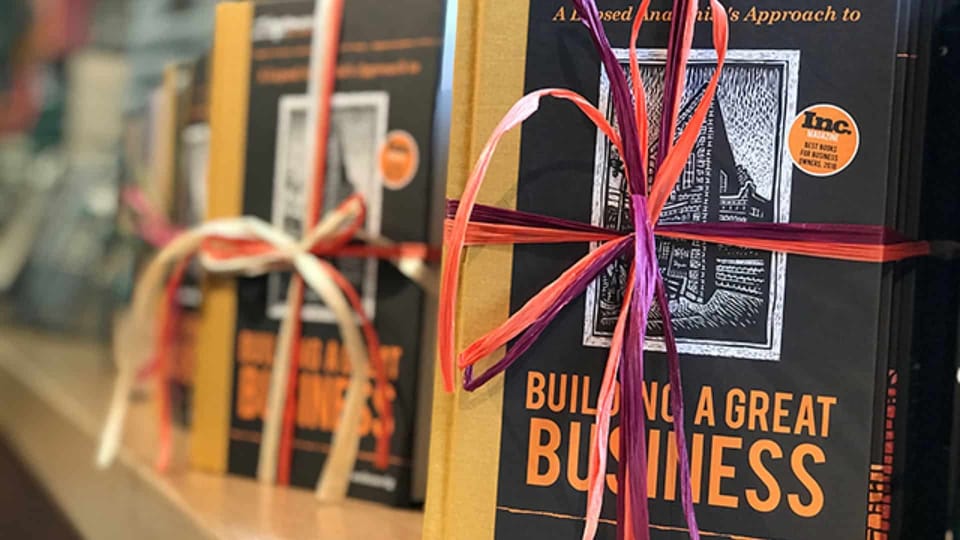
Sometimes one good book leads to another — or, in this case, to a whole series of books.
Last year I read The Positive Organization by Robert Quinn. Quinn mentions a deli in Ann Arbor, Michigan called Zingerman’s. “Zingerman’s is considered the epitome of a positive organization,” he writes.
That got me curious. I looked up their website, saw that they have a training division, and ended up buying Zingerman’s Guide to Good Leading written by co-founder Ari Weinzweig. It’s led to some of the most enjoyable and profitable reading I’ve ever done in this genre, and even to me meeting the author.
The Danger of Business Books
I generally think pastors spend too much time reading business books. A church can learn from business, but it’s not a business. It's truly one of a kind. I want to be more Scripturally and theologically shaped as a pastor, not less.
Here's my warning for myself and others: let's commit to being guided by Scripture and steer clear of the risks of pragmatism. We can learn from others, but let’s always begin and end with a biblical vision for pastoring and life.
Business, Not as Usual
Zingerman’s Guide to Good Leading comes in four volumes:
- A Lapsed Anarchist’s Approach to Building a Great Business
- A Lapsed Anarchist’s Approach to Being a Better Leader
- A Lapsed Anarchist’s Approach to Managing Ourselves
- A Lapsed Anarchist’s Approach to the Power of Beliefs in Business
Anarchist? You can already tell that this is not your ordinary approach to business. Weinzweig asserts that anarchism values individual respect, promotes a non-hierarchical structure, and aligns means with ends. It’s freedom to, not freedom from. It’s an approach that seeps through his entire approach to leadership and life.
Weinzweig organizes his teaching into a series of essays around “12 natural laws of business” and 39 “secrets.” His natural laws include:
- An inspiring, strategically sound vision leads the way to greatness (especially if you write it down!)
- People do their best work when they are part of a really great organization
- If you want the staff to give great service to customers, the leaders have to give great service to the staff
- Success means you get better problems
- Whatever your strengths are, they will likely lead straight to your weaknesses
- It generally takes a lot longer to make something great happen than people think
- Great organizations are appreciative, and people in them have more fun
His "secrets" include tips on visioning, fostering appreciation, serving as a leader, self-management, changing beliefs, and providing hope.
He’s not in a rush to unpack his approach. After all, the books are almost 1,800 pages combined. But I found him insightful, and that he often covers topics better than anyone else I’ve read. He gave me fresh insights, and has also pointed me to other books and writers I’m starting to enjoy.
I like Weinzweig. He’s a gifted writer, a good leader, and generous in his approach to life.
What’s Unique
Weinzweig could have expanded his business nationally. Instead, he chose to stay small and grow the business in Ann Arbor. He didn’t follow the normal playbook. He prefers small, local, and unique rather than bland and big.
I valued his insights on being intentional with our energy in interactions, viewing leadership as service ("I, as the leader, come last"), leading without command and control, and developing systems and culture simultaneously.
I also appreciated his willingness to question conventional leadership wisdom. Bigger is not always better. Leadership is about service, not power and control.
I also appreciate his passion for good food and sustainable agriculture. “The best cooking is a lot like leading a good organization,” he writes. His passion for his field helps me build passion for my own, including the intricacies of my work.
I can think of countless ways that I can continue to learn and apply lessons I learned from these books.
Coffee with Ari
Reading Weinzweig’s books is like sitting down with him over a coffee. I know, because I’ve since enjoyed a coffee with him.
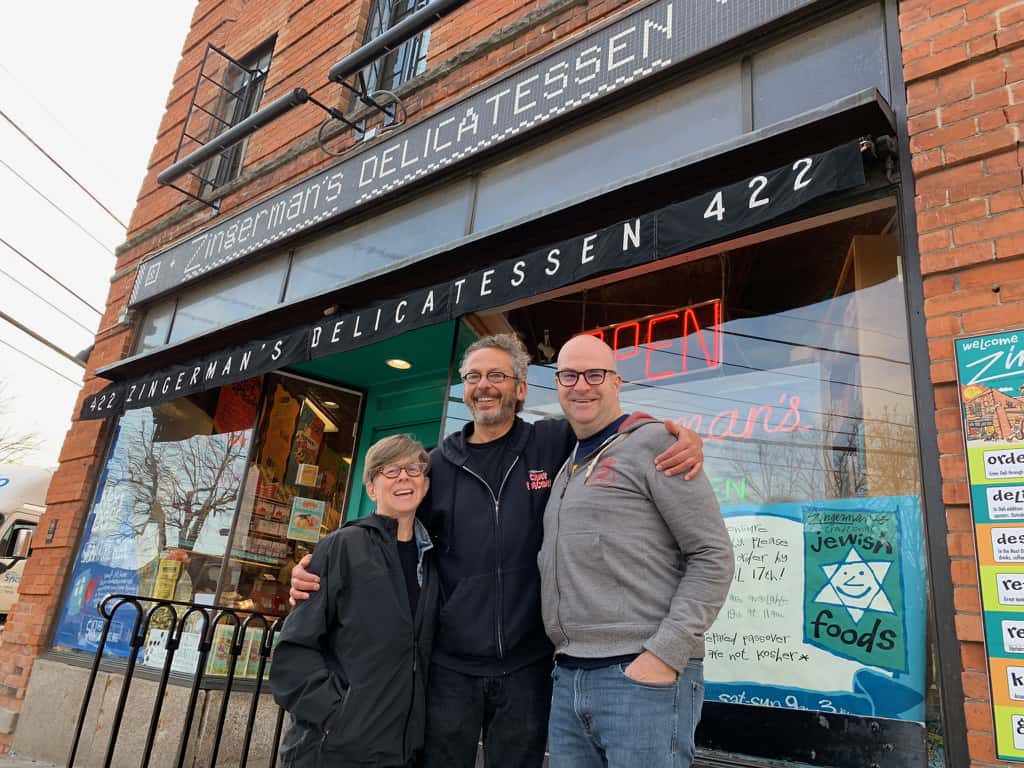
Weinzweig shares what he’s learned over 37 years of business. He’s read widely, and he has a knack for synthesizing information. His books are a unique blend of theory and practice. He’s not a theoretician; he’s a principled practitioner with strong convictions.
They’re also beautiful books, printed in Ann Arbor, full of scratch art. They are a pleasure to hold and read. I’m also impressed that he invites correspondence with his readers.
I don’t agree with everything, of course. I’m still not there when it comes to anarchism, although I appreciate his respect for individuals. We share little in the way of theological alignment. But that doesn’t stop me from learning and benefiting from his work.
Every morning I would read ten pages. As I got to the end, I felt sad, like I was losing a friend. But I’m not. I’ll continue to dip into these books, and I’ll continue to learn from a man who has a lot to teach.
These books aren’t for everyone, but if you’re like me, maybe you’ll enjoy them too. I’m better for having read them.
More from Zingerman’s Press