The One-Straw Revolution
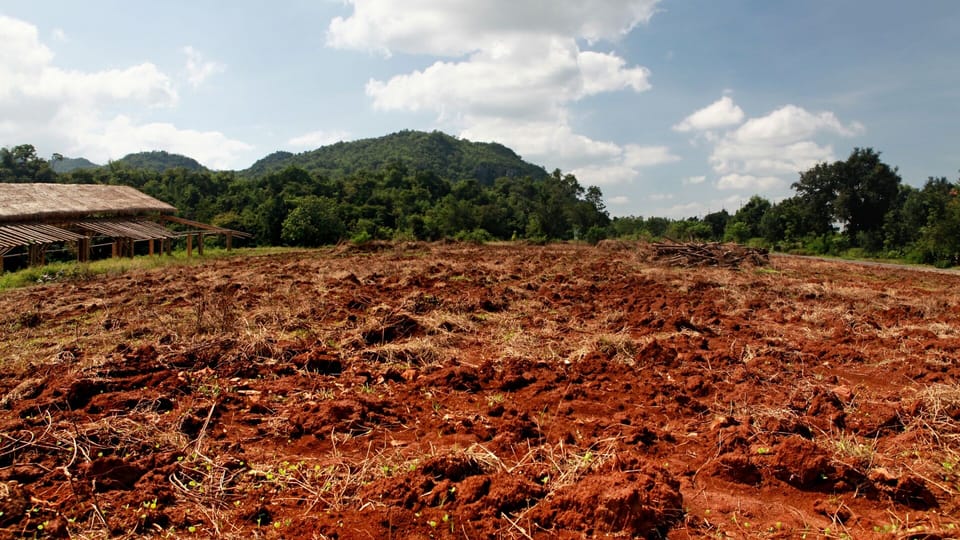
Masanobu Fukuoka was a Japanese farmer and author of The One-Straw Revolution. As a young man, he studied agriculture and worked as an inspector, studying diseases and pests on imported plants. He was amazed at the “world of nature as revealed through the eyepiece of a microscope.”
Fukuoka is famous for his approach to farming. He saw nature as ideally arranged and abundant. When we try to improve on nature, we inevitably introduce adverse side effects. Then we take additional action to counteract those side effects and introduce even larger problems. We spend most of our time mitigating problems we introduced. Fukuoka advocated for a simpler approach: understanding the ecosystem's complexity and farming with natural methods. He began to farm this way, and many visited his farm. He later toured and taught others about his method.
Fukuoka saw his methods as an approach to life, not just farming. Although he didn’t see himself as religious, his views were shaped by Eastern religion.
Fukuoka’s ideas are not widely held, but books like Dirt to Soil and The Permaculture Handbook develop similar themes within North America.
A Christian Assessment
I’m no expert on farming, but a lot of Fukuoka’s suggestions seemed to make sense to me. The Hebrew Scriptures address our stewardship of the earth and call us to care for this world and cultivate it. The Law required Israel to farm in a way that preserved the fertility of the soil without exhausting it (Leviticus 25:4-5; 25:11).
Fukuoka criticizes our obsession with technology and science. Technology can be good, but we can rely too much on it. Scientists may analyze individual subjects, but often fail to capture the complexity of the ecosystem. “The irony is that science has served only to show how small human knowledge is,” he writes.
Fukuoka’s teachings are full of Eastern religious concepts, and he certainly doesn’t hold a Christian worldview. One cannot accept his teachings uncritically. However, we cannot overlook the significance of his teachings. We can acknowledge that our approaches to farming and life rely too much on artificial methods, and that our attempts to improve things through pesticides, pharmaceuticals, and technology lead to unintended problems. We can grow in our appreciation of the complex ecosystems that God has placed all around us.
We can’t accept everything Fukuoka teaches, but I do believe he’s on to something.
The Natural Approach to Pastoring
As I read his book, I thought a lot about pastoring. I sometimes wonder how much of our approach to pastoring has been influenced by industrial methods. I'm surprised by how often the New Testament uses farming metaphors, such as sowing, reaping, watering, and harvesting, to describe ministry.
We lose something when our paradigm for pastoring is industrial, and our focus is bigger, faster, and better. Farming teaches us valuable lessons, such as patience, humility, and the importance of hard work without expecting certain outcomes.
Reading The One-Straw Revolution was a stretch for me. I wonder if it's time for a change in how we approach pastoring—shifting away from modern, industrial methods to embrace slower, traditional cultivation practices. We should also acknowledge the complexity of a church ecosystem.
It may be time for a one-straw revolution in pastoring.