Disgusted with Life? (Ecclesiastes 2:1-26)
Big Idea: True happiness and meaning come from a relationship with God, not from pleasure or work.
I really like those Kraft Kitchen commercials on the radio. A busy mom often has kids waiting at home for activities like swimming lessons or kung fu. The parents have plans to go bowling or whatever else parents do.
A Kraft Kitchen mother shares cooking tips for busy families. She always emphasizes that she has very little time to cook, and she's in a rush. And invariably, at the end of one of those commercials, I'm ready to eat whatever she's got cooking.
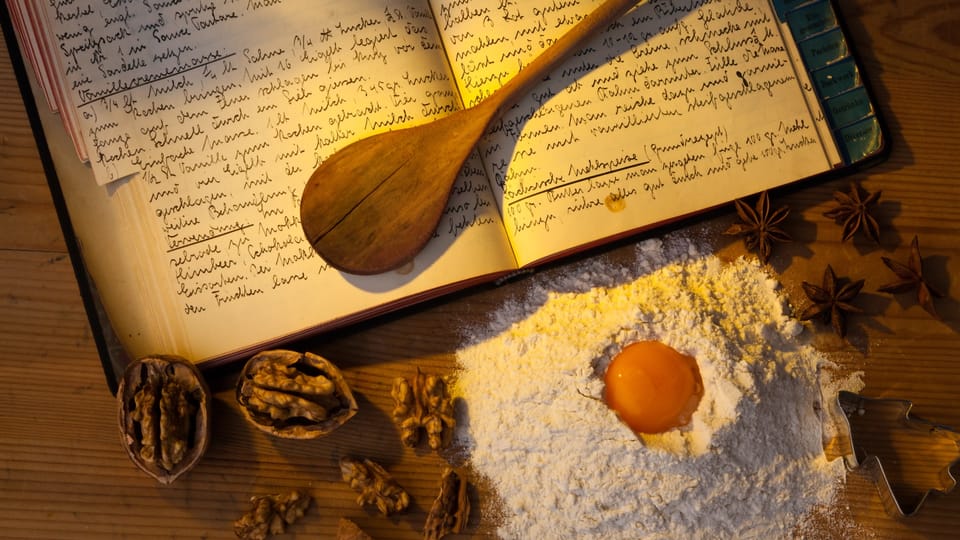
Now, imagine you're hired. And not by Kraft, but you're hired by someone with a lot of money. You need to create a "recipe for life," not for food. Your assignment, should you choose to accept it, is to come up with a recipe for happiness. Your assignment is to come up with a delicious recipe for life.
Right away, you want to know what resources you have available. You're told you have a virtually unlimited budget—spend millions if you'd like. How many staff can you hire? Hire as many as you'd like. Take your time. But your assignment is to come up with a recipe for a happy life.
I don't know about you, but I'd probably accept this assignment. Who wouldn't want a job that offers travel, money, free time, and a chance to find happiness? Those who didn't raise their hands, please leave. No, I would take this assignment.
The Bible, which many people think is a dry, dusty, irrelevant book, actually describes such an experiment. Thousands of years ago, someone – probably King Solomon of Jerusalem – embarked on this assignment. He was looking for happiness and fulfillment in his life.
In the past two weeks, we've looked at the initial phase of what you could call his experiment. He argues that everything from a human perspective is meaningless and empty, like vapor.
"But wait," you say, "he hasn't finished his experiment yet." You're right. So today we're going to join him as he continues his search for happiness in life.
Two Recipes
Open your Bibles, if you have them, to Ecclesiastes 2. Picture this: not Kraft's Kitchen for busy moms, but Solomon's kitchen for those seeking happiness. Solomon tests two classic recipes for joy: enjoyment and work.
Recipe One: Enjoyment
Look at the first recipe Solomon tried.
I said in my heart, “Come now, I will test you with pleasure; enjoy yourself.” But behold, this also was vanity. (Ecclesiastes 2:1
One translation says, "I said to myself, 'Come now, let's give pleasure a try. Let's look for the 'good things' in life." Then he describes some of the things he tried to find pleasure:
I searched with my heart how to cheer my body with wine—my heart still guiding me with wisdom—and how to lay hold on folly, till I might see what was good for the children of man to do under heaven during the few days of their life.(Ecclesiastes 2:3)
In my mind's eye, I can easily imagine Solomon experimenting with the finer things in life. The finest wines, the tastiest and best cuts of meat, entertainers, beautiful women, expensive toys. They were all his.
If Solomon were here today, he might go to the finest shops and boutiques in town. He would go to all the fun places to be. He would allow himself to be entertained and indulged, and there he would find happiness.
Some people try this experiment today. They say, "If I could only experience more pleasure in life, I would be happy." Today's world is obsessed with pleasure. We spend millions to buy experiences and escape from the burdens of life. "If it feels good, do it!"
Many people enjoy having fun, but it's surprising how many build their lives around seeking pleasure. It becomes their focus in life.
And let me tell you something: they're all disappointed. Because while pleasurable experiences are, well, pleasurable, they do not bring lasting satisfaction or contentment to the soul. Look at verses 1 and 2 again:
I said in my heart, "Come now, I will test you with pleasure; enjoy yourself.” But behold, this also was vanity. I said of laughter, “It is mad,” and of pleasure, “What use is it?" (Ecclesiastes 2:1-2)
As Proverbs 14:13 says:
Even in laughter the heart may ache,
and the end of joy may be grief.
You know, pleasure-seeking is good for a time, but pleasure is elusive: the more we look for it, the less we find. Pleasure is like cotton candy: it sure tastes good for a minute, but you sure can't live on a diet of cotton candy.
The irony is that the more we crave pleasure, the less it satisfies. The law of diminishing returns suggests that if pleasure is our main goal in life, it ultimately leads to a lack of enjoyment and feeling trapped.
Warren Wiersbe points out that the more people drink, the less pleasure they get out of it and the more drinks they need. The more people misuse drugs, gambling, sex, money, fame, or any other pursuit, the less it brings in return.
When we make pleasure our goal in life, the result is ultimately disappointment and emptiness. Solomon said it: pleasure turned out to be meaningless; laughter cannot mask an unfulfilled life.
Now understand: Solomon is not attacking those who have fun or have a healthy sense of humor. He's saying that if it's your only reason for living, there's no lasting satisfaction. It's at best short-lived and superficial. It may dull the harsh realities of life, but it doesn't truly satisfy.
Now let's stop and ask ourselves: how many of us are looking to pleasure to bring us happiness? How many of us are looking to alcohol or sex or television or movies or entertainment to make us happy?
True happiness doesn't come from a bottle or from Hollywood. Canada's Wonderland doesn't sell happiness. You won't find life's answers on Seinfeld or Friends. So stop looking there!
Solomon tried to find happiness in enjoying life, but it wasn't enough. He also tried a second familiar recipe:
Recipe Two: Work
The next thing Solomon tried was employment. Verse 4, says, "I made great works."
Verses four to ten describe the projects that Solomon tried in an attempt to find something worth living for. He built houses, cities, gardens, vineyards, orchards, and forests. He built the water system needed to service them.
He supervised the building of the temple, one of the greatest buildings of its time. He hired workers, including 30,000 Jewish men, to work on his projects. He accumulated wealth in flocks and herds, and gold and silver.
When the Queen of Sheba visited Solomon, she said:
The report was true that I heard in my own land of your words and of your wisdom, but I did not believe the reports until I came and my own eyes had seen it. And behold, the half was not told me. Your wisdom and prosperity surpass the report that I heard. (1 Kings 10:6-7)
Despite his wealth and lifestyle, including a harem, Solomon found no satisfaction in his work.
Then I considered all that my hands had done and the toil I had expended in doing it, and behold, all was vanity and a striving after wind, and there was nothing to be gained under the sun. (Ecclesiastes 2:11)
Henry Ward Beecher said, "Success is full of promise until men get it, and then it is last year's nest from which the birds have flown." Many overachievers are miserable people. Riches do not bring happiness. Success in your career does not bring happiness in and of itself.
One person writes:
If lasting happiness could be found in having material things and in being able to indulge ourselves in whatever we wanted, then most of us… should be delirious with joy and happy beyond description. We should be producing books and poems that describe our state of unparalleled bliss. Our literature and art should rival that of the ancient Greeks and Romans and Renaissance craftsmen.
Instead we find those who have "things" trying to get more of them, for no apparent reason other than to have more. We find high rates of divorce, suicide, depression, child abuse, and other personal and social problems beyond description. We find housewives trading tranquilizer prescriptions. All this is surely proof that happiness is not found in the state of having all we want and being able to get more.
Chuck Swindoll captures this passage well: sensual pleasures promise much but lack staying power. They claim to open our eyes, yet they blind us. They disillusion us, turning us into masters of disguise.
Somebody wrote a poem in 1897:
Whenever Richard Cory went down town,
We people on the pavement looked at him;
He was a gentleman from sole to crown,
Clean favored, and imperially slim.
And he was always quietly arrayed,
And he was always human when he talked;
But still he fluttered pulses when he said,
“Good-morning,” and he glittered when he walked.
And he was rich – yes, richer than a king.
And admirably schooled in every grace:
In fine, we thought he was everything
To make us with that we were in his place.
So on we worked, and waited for the light,
And went without the meat, and cursed the bread;
And Richard Corey, one calm summer night,
Went home and put a bullet through his head.
Solomon says in verse 12:
So I turned to consider wisdom and madness and folly. For what can the man do who comes after the king? Only what has already been done. (Ecclesiastes 2:12)
In other words, he's saying, "Maybe it's better not to know." He began to think, "Since both fools and the wise die and are forgotten, why should I be wise?"
The wise person has his eyes in his head, but the fool walks in darkness. And yet I perceived that the same event happens to all of them. (Ecclesiastes 2:14)
For of the wise as of the fool there is no enduring remembrance, seeing that in the days to come all will have been long forgotten. How the wise dies just like the fool!(Ecclesiastes 2:16)
What difference does it make if you're wise or a fool? You both die just the same. And who will remember your name in a few years? The wise man won't be any better remembered than the fool.
Death is the great leveler: good men and bad men die. Death tramples on every value judgment we make. Wisdom might be better than folly, but guess what? If life ends at the grave, neither of them will get the last word. The choices we have made in our lives become irrelevant.
As one man said, "If every card in our hand will be trumped, does it matter how we play?"
I hope you're beginning to discover that the answer to the meaning of life is not found "under the sun." After all Solomon's reasoning, listen to what he says beginning in verse 17:
So I hated life, because what is done under the sun was grievous to me, for all is vanity and a striving after wind. (Ecclesiastes 2:17)
Do you blame Solomon for being depressed? Then Solomon looks at one more thing in verses 18-23:
I hated all my toil in which I toil under the sun, seeing that I must leave it to the man who will come after me, and who knows whether he will be wise or a fool? Yet he will be master of all for which I toiled and used my wisdom under the sun. This also is vanity. So I turned about and gave my heart up to despair over all the toil of my labors under the sun, because sometimes a person who has toiled with wisdom and knowledge and skill must leave everything to be enjoyed by someone who did not toil for it. This also is vanity and a great evil. What has a man from all the toil and striving of heart with which he toils beneath the sun? For all his days are full of sorrow, and his work is a vexation. Even in the night his heart does not rest. This also is vanity.
Solomon could very well say, "What difference does it make?" If death is the end of life, why does it matter how we live? The verses we just read point out that all the things we work for are temporary.
After we're gone, after our life's work has been completed, all our work will be like a sandcastle on a beach as the tide comes in. Our work will likely disappear.
Solomon's Conclusion
Friends, Solomon is trying to save us some grief. Solomon is in the Kraft kitchen of life and is trying out some recipes. He's pointing out the approaches to life that he's cooked up that have tasted really bad in the end.
Now you have an option. Are you going to ignore Solomon's experiences and cook up these recipes anyway? Or are you going to end up learning the hard way, or are you going to learn from Solomon's experience?
This morning we're completing the first section of Ecclesiastes. Solomon has so far presented four arguments that seem to prove that life is not worth living:
- the monotony of life (1:4-11)
- the vanity of wisdom (1:12-18)
- the futility of wealth (2:1-11), and
- the certainty of death (2:12-23)
According to Solomon, life is not worth living if you live under the sun.
But then God enters the picture. It is the first note of optimism evident in Solomon's thinking. And guess what? It's when God enters the picture.
Read verses 24 to 26 with me:
There is nothing better for a person than that he should eat and drink and find enjoyment in his toil. This also, I saw, is from the hand of God, for apart from him who can eat or who can have enjoyment? For to the one who pleases him God has given wisdom and knowledge and joy, but to the sinner he has given the business of gathering and collecting, only to give to one who pleases God. This also is vanity and a striving after wind.
You know what Solomon is saying? He's saying, "Yes, life under the sun is meaningless. If you leave God out of the picture, life is just like a giant bubble that will surely pop."
But enter God, and Solomon remembers that our food and drink and work is really a gift from God and is to be enjoyed. "For apart from him who can eat or who can have enjoyment?" (Ecclesiastes 2:25)
Only with God does life make sense. Now listen to me. Only in God does life have meaning and true pleasure. Without God, nothing satisfies, but in God we find satisfaction and enjoyment. True satisfaction in life only comes when we acknowledge God; it's the only recipe that works. Without him, life is futile.
The gospel transforms us by guiding us to God's ultimate plan for life, which he has already provided. Solomon’s experiments reveal the futility of seeking happiness in pleasure, work, or wisdom alone. These pursuits, while good gifts in themselves, cannot bear the weight of our deepest longings. They are signposts, not destinations. The gospel teaches that true joy and fulfillment come from our relationship with our Creator, not from our achievements or possessions.
Jesus Christ came into our troubled world to provide what Solomon only imagined: a meaningful and joyful life anchored in God. Jesus addressed the ultimate challenges of life—sin and death—through his life, death, and resurrection, allowing us to experience true life. In him, we find forgiveness for our misplaced pursuits and the freedom to enjoy God’s gifts without idolizing them. The gospel encourages us to stop chasing after empty things and find rest in Christ's completed work, where true happiness starts.