Where Righteousness Comes From (Romans 4:13-25)

Big Idea: Righteousness doesn't come through your own efforts; it comes by grace through trusting in what God has accomplished through Jesus.
Right now, at this very moment, you have one of two futures before you: become righteousness, or face God's wrath. It doesn't matter who you are or whether you consider yourself a Christian. These are the only two possible realities ahead of you.
If this is true, the most important question you face is: “How can I become righteous before God?” That question matters more than who you'll marry, what you'll do with your life, or where you'll live. Nothing compares to the urgency of this question.
The problem? The way we think we'll gain righteousness turns out to be wrong. We need to set the right goal—becoming righteousness—but we also need to discover the unexpected path to get there. That's what today's passage is all about.
How Not to Become Righteous (4:13-15)
If you want to be righteous, here’s what won’t work:
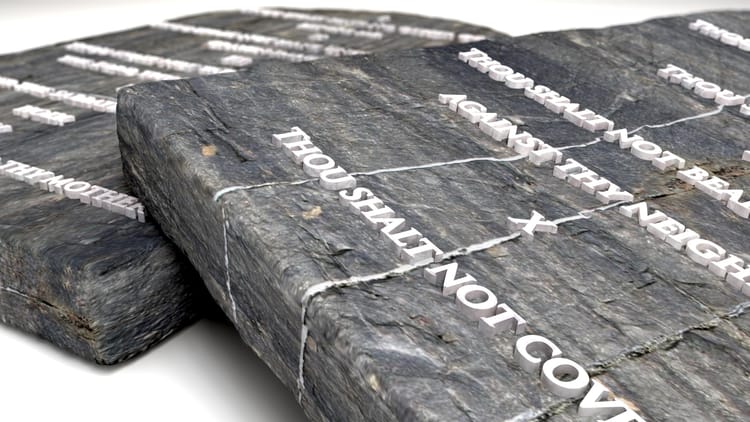
For the promise to Abraham and his offspring that he would be heir of the world did not come through the law but through the righteousness of faith. For if it is the adherents of the law who are to be the heirs, faith is null and the promise is void. For the law brings wrath, but where there is no law there is no transgression. (Romans 4:13-15)
Here’s Paul's argument so far: everyone, without exception, stands under God's wrath. Good or bad, we're all in the same boat. We can't fix this ourselves. The only way to be made right with God is through faith in Jesus, not through our own efforts at obedience.
This is deeply humbling news: you're not good enough, and you can't make yourself good enough.
Paul knew how much we would struggle with this reality, because he deals with a counterargument. What about Abraham? In verse 13, Paul says that Abraham got the promise that he would be heir of the world. This is an amazing promise. In Genesis 12, God promised Abraham:
And I will make of you a great nation, and I will bless you and make your name great, so that you will be a blessing. I will bless those who bless you, and him who dishonors you I will curse, and in you all the families of the earth shall be blessed. (Genesis 12:2-3)
God promised Abraham offspring, fatherhood of a nation, an everlasting covenant, and land. But when God said "all the families of the earth" would be blessed through him, he had something bigger in mind: Abraham's descendants would inherit the whole world. Ultimately, Christ and his people will reign together over a new heaven and earth.
That's an enormous promise. So how does Abraham receive it? Verse 13 shows two possible means: through the law or through the righteousness of faith.
- Option A: Abraham obeys God's law perfectly. He earns it; God rewards.
- Option B: Abraham receives the promise as a gift by trusting God.
These approaches are diametrically opposed. You must choose one.
So which is correct? Paul answers in verses 14-15: if you choose the law, you lose out. The law doesn't lead to the promise; it leads to wrath. God's law doesn't vindicate us; it condemns us because of our sinfulness. The problem isn't the law; it's us. If we're depending on the law to save us, we're in trouble.
Paul already said this in Romans 3:19: "By works of the law no human being will be justified in his sight, since through the law comes knowledge of sin." The law doesn't bring salvation; it brings wrath.
Verse 15 drives this home: "Where there is no law there is no transgression." Transgression means violating a specific command. The law creates the possibility of transgression, which makes us more guilty. If we try to become righteous through obedience, we're condemned by the very law we're trying to keep.
Here's what won't work: we can't be righteous by keeping the law.
This hits close to home because so many of us still operate as if the law can save us. We know the gospel intellectually, but we live as though God's acceptance depends on our spiritual performance. We think that if we read our Bible enough, pray enough, serve enough, or keep our sin under control, then God will be pleased with us and we'll be righteous.
But Paul is telling us that this entire approach is doomed from the start. The law wasn't given to make us righteous; it was given to expose our unrighteousness. Every command we try to keep only highlights how far short we fall. This approach will never work.
The Surprising Way to Become Righteous (4:16-17)
So what’s the answer? Verse 13 has already given us a hint, but verses 16 and 17 will spell this out.
Verse 13 mentioned “the righteousness of faith.” This means that God gives us righteousness not because we earned it, but simply by his grace through faith in Jesus.
Now Paul unpacks this in verses 16 to 17:
That is why it depends on faith, in order that the promise may rest on grace and be guaranteed to all his offspring—not only to the adherent of the law but also to the one who shares the faith of Abraham, who is the father of us all, as it is written, “I have made you the father of many nations”—in the presence of the God in whom he believed, who gives life to the dead and calls into existence the things that do not exist.
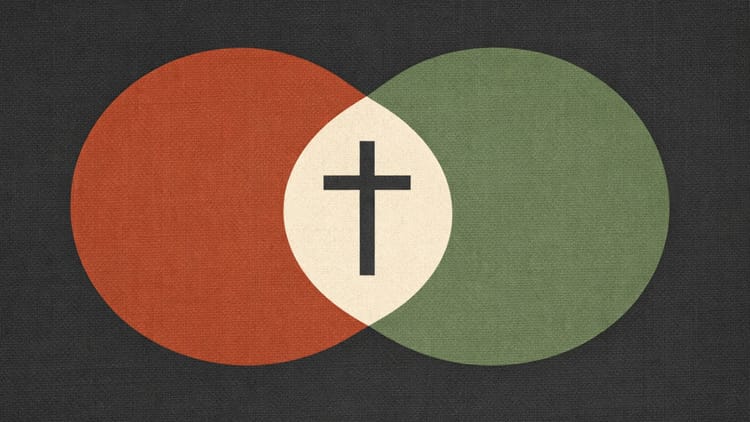
There are only two possible ways to become righteous. Paul has already explained that if we try to become righteous through our obedience, it leads to condemnation. The law and our condemnation are linked—pick up one and you pick up the other. Now he explains the other option: pick up faith and you get grace, because they too are linked. Grace is the unmerited favor of God apart from human works, and it comes to us by simple acceptance, which is faith. You have to choose. If you choose works, you get condemnation. If you choose faith—simply holding out your hands for God's gift—you get everything you were looking for. As Paul explains in verses 16 and 17, this applies to everyone who puts their trust in Jesus, right down to today: Jew and Gentile, religious and irreligious, moral and immoral. It's the only way anyone can be made right with God.
All of this, according to Paul, doesn't depend on us. If it did, we would be in deep trouble. Instead, it depends on God, the one who gives life to the dead and calls into existence things that don't even exist. Our salvation is in very good hands.
This is why our ultimate salvation is guaranteed: it rests on grace received through faith, not on our works, circumcision, law-keeping, or anything else we might do. It's founded on God's everlasting grace. If salvation depended on human abilities, faithfulness, or understanding, not a single one of us would arrive in glory. But our salvation is sure because it rests in God's hands and cannot fail. We can't earn it, but we can receive it through faith, and that's the only way to be saved.
What This Looks Like (4:18-22)
Let’s review so far. All of us have one of two futures ahead of us: to be counted righteous before God, or to face his judgment. If we want to become righteous, we can try to earn our righteousness through obedience, but that will never work. The only way to become righteous is to simply by receiving God’s grace through faith.
But what exactly does this look like in practice? Paul answers in verses 18 to 22:
In hope he believed against hope, that he should become the father of many nations, as he had been told, “So shall your offspring be.” He did not weaken in faith when he considered his own body, which was as good as dead (since he was about a hundred years old), or when he considered the barrenness of Sarah’s womb. No unbelief made him waver concerning the promise of God, but he grew strong in his faith as he gave glory to God, fully convinced that God was able to do what he had promised. That is why his faith was “counted to him as righteousness.”
How do we become righteous? By grace through faith. What does faith look like? Paul says: faith is believing and trusting a person based on that person's trustworthiness.
Listen to what Paul says. God promised that Abraham would be the father of many nations. Abraham was 99 years old; Sarah was 90 and had never had a child. Picture Abraham, hands weathered and trembling with age, standing under a midnight sky filled with stars that God promised would outnumber his descendants. It seemed impossible.
But then he remembered God, the sovereign Creator who made the world by his great power and outstretched arm (Jeremiah 32:17). On one hand, you have the impossible. On the other hand, you have the God who accomplishes the seemingly impossible. Which are you going to choose?
Paul tells us something important here. Faith isn't primarily about the strength of our trust; it's about the character of the One we trust. Faith is grounded in who God is. I like how one preacher (James Montgomery Boice) puts it:
We are not saved because we have a strong subjective faith (that would focus the matter on us), but because we believe the promises of God regarding salvation, promises made known to us in the pages of the Bible. In other words, Christian faith is a Bible faith. Or, to put it in still other words, we are saved not because of our faith but because of God’s promises. True faith is receiving these promises and believing them on the basis of God’s character.
Don't put your trust in your own obedience. Put your hope entirely in God. When you're tempted to despair, don't focus on the size of your faith; focus on the size of your God. Look at his track record in Scripture. Remember that he raised Jesus from the dead. Recall his promises to never leave you or forsake you, to work all things together for your good, and to bring you safely home. Our righteousness doesn't depend on perfect faith; it depends on a perfect God who keeps his promises. That's where real confidence comes from. Faith is simply trusting the One who is supremely trustworthy, and when we do, God credits us with righteousness as a gift.
You may be wondering why we’re talking about all of this. In the end, Paul explains, he’s not talking about all of this for Abraham’s benefit. He’s talking about it for our benefit. Read verses 23 to 25:
But the words “it was counted to him” were not written for his sake alone, but for ours also. It will be counted to us who believe in him who raised from the dead Jesus our Lord, who was delivered up for our trespasses and raised for our justification.
Here's Paul's point: God credited Abraham with a righteousness that was not his own. But this truth isn't just for Abraham; it's for us too. When we believe that Jesus died to atone for our sins and that his resurrection proves the penalty has been paid in full, God credits us with Christ's righteousness. We can see all the reasons why we can’t be saved, but then we see the utter trustworthiness of God and put our faith and trust in him.
Righteousness doesn't come through your own efforts; it comes by grace through trusting in what God has accomplished through Jesus.
Friends, your future depends entirely on whether you're trusting in your own righteousness or receiving Christ's righteousness by faith. Maybe you’re thinking, “That can’t be true for me. I’ve failed too much,” or “Believing sounds too easy. Surely I need to do something.” This message is for you.
If you've been exhausting yourself trying to be good enough for God, you can stop. The law was never meant to save you; it was meant to show you that you need a Savior. But if you'll simply trust that Jesus lived the perfect life you couldn't live, died the death you deserved to die, and rose again to prove your debt is paid, then God declares you righteous. Not because of anything you've done, but because of everything Christ has done.
That's the gospel. That's grace. And that's the only hope any of us have. If you’re here today and wondering if this is really for you—whether you’ve been following Jesus for years, are stuck and don’t know how to move forward, or are maybe still deciding what you believe—even you kids listening, this offer is for you: trust him. Abraham believed God against all odds, and it was counted to him as righteousness. The same offer stands before you today. Will you trust him?