Three Gospel Implications (Romans 3:27-31)

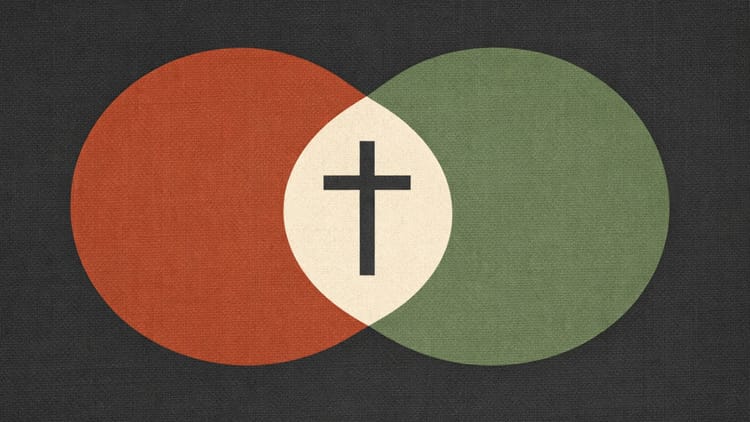
Big Idea: The gospel humbles us, unites us, and teaches us the purpose of God’s law.
Today I want to do one thing: follow the advice of the late businessman, investor, and philanthropist Charlie Munger, who said, "Take a simple idea and take it seriously."
That's exactly what I want us to do with the passage we just read, one of the most important in all of Scripture. Paul's message in Romans 1:18 to 3:25 is clear: all humans are condemned and powerless before God, but through Jesus Christ, God has provided what we cannot achieve on our own.
- We were guilty; God declared us innocent.
- We were enslaved; God purchased our freedom.
- We were under his wrath; Jesus absorbed it.
Everything that needed to be done has been done for us.
It's a simple idea, yet profoundly life-changing. It's the gospel itself. When you truly grasp what God has done for you in Christ, everything shifts. But understanding alone isn't enough. We must take it seriously and let it shape how we live.
That's exactly what Paul does in this passage. He wants us to explore what the gospel means for everyday life. Paul explores profound truths in entire chapters, and we will dedicate our lives to understanding and applying them.
Three Implications
In the rest of chapter 3, he outlines three practical implications we can start applying today.
The gospel humbles us (3:27-28).
Then what becomes of our boasting? It is excluded. By what kind of law? By a law of works? No, but by the law of faith. For we hold that one is justified by faith apart from works of the law.
Here's the first implication of the gospel in this passage: it eliminates our ability to boast. This matters so much that Paul addresses it here and returns to it again in chapter 4. Clearly, he sees boasting as a critical issue.
Why is boasting such a big deal? As John Piper puts it, "Boasting is the outward form of the inner condition of pride." And pride is our deepest spiritual problem—a fatal condition that's often invisible to us.
Here's how pride shows up in our lives. We all anchor our worth in something: money, beauty, athleticism, power, intelligence. We tell ourselves, "This is why I matter. This is why I'm worthy of love." We even do this with our children, believing that if we measure up in certain ways, it proves our value.
The real danger is when we bring this mindset into our spiritual lives. All pride is destructive, but religious pride is especially deadly. Driven by earthly pride, we pursue the validation of others. With religious pride, we're seeking God's approval—trying to convince him (and ourselves) that we're good enough.
In Paul's day, people were tempted to boast in their Jewish heritage and their knowledge of the law. Today, we may feel proud of our spiritual practices, service, growth, morality, theology, faith, and even our suffering.
The gospel entirely eliminates any basis for boasting. If we had contributed to our salvation, we would have reason to boast. But because we contributed nothing, we have nothing to boast about. How are we made right with God? Not by keeping the law, but by placing our faith in Jesus and receiving grace we could never earn. God accomplished our salvation without any contribution from us. He did it all. We had no part in achieving it.
That means we can claim no credit. It's a pure gift. We can't even boast about our faith; that too comes from God. We have zero grounds for boasting.
Why does this matter so much? Because nothing will destroy you spiritually faster than pride. Pride is grace's mortal enemy. It puts you back on a performance-based salvation plan, which is a dead end. Pride steals from God the glory that belongs to him alone. Nothing is more spiritually dangerous than religious pride.
Let me ask you a question. What are you tempted to boast about spiritually? Is it how much you've grown? How faithful you have been? How much you understand? How hard you're working for God?
Here's the liberating truth: you don't have to prove anything. You're already fully accepted because of what Christ has done, not because of what you've accomplished. When you catch yourself slipping into spiritual pride — and you will!— don't pretend it's not there. Confess it. Thank God that your acceptance comes from his grace, not your performance. Let the gospel humble you, and then let it lift you up.
Nothing in your hands we bring; simply to the cross we cling. That’s the first implication of the gospel. Here’s the second.
The gospel unites us (3:29-30).
Or is God the God of Jews only? Is he not the God of Gentiles also? Yes, of Gentiles also, since God is one—who will justify the circumcised by faith and the uncircumcised through faith.
The first implication of the gospel is that no one can boast. The second implication follows closely: the gospel eliminates distinctions. Paul shows that, while everyone is guilty before a holy God, the gospel saves all people equally, without distinction.
Consider the logic. It would have been natural for Jewish believers to assume they held a spiritual edge over Gentiles. After all, the Jewish people did possess genuine spiritual advantages, as Paul himself acknowledged earlier in Romans. They had the law, the prophets, and a clear understanding of God's expectations. Their privileges were real and significant.
The situation in Rome made this tension even more acute. The Roman church began as a largely Jewish community, but when Jews were expelled from the city, everything changed. By the time they returned, the church had become predominantly Gentile. Jewish believers returned to find themselves as minorities in congregations they had established, possibly feeling spiritually superior while adjusting to this new situation.
But Paul cuts through all of that with two decisive points.
First: there is one God. Not separate deities for Jews and Gentiles, but one God over all.
Second: God saves through one way alone. It doesn't matter whether you're Jewish or Gentile, Muslim or Hindu, atheist or agnostic. There is only one path to salvation. Verse 30 makes it crystal clear: How are circumcised Jews saved? Through faith in Jesus. How are uncircumcised Gentiles saved? Through faith in Jesus. Same God. Same way. Same grace.
One way to say this would be that God threatens religious pluralism with the glorious freeness of grace. He comes to every world religion and every personal religiousness or irreligiousness and says, I offer you the good news that you may have forgiveness of your sins and be reconciled to your Creator and have everlasting life by grace alone through faith alone in my Son Jesus Christ. I have already acted in history to remove my wrath and to take away human guilt. If you will have it as your loved and trusted treasure, it is yours. (John Piper)
This truth should reshape how we see every person we encounter. If God shows no favoritism, neither can we. The gospel that reached us can also reach anyone, including neighbors with different political views, coworkers from other religious backgrounds, and spiritually indifferent family members.
Salvation has never been about human advantage or merit. It's always been about God's gracious work through faith in Christ alone. When we truly grasp this, it changes how we see and love the people around us.
It also means that everyone may come. Who can come to Jesus? Anyone can come. It doesn’t matter what your background is. It doesn’t matter what your sin is. The gospel is for you. There’s hope for the most religious person and there’s hope for the greatest sinner. If you come to Jesus, you will be received. There’s hope for anyone who comes to Jesus.
The gospel eliminates boasting. The gospel eliminates distinctions. There’s one more implication of the gospel, and this time it’s not something it eliminates; it’s something it preserves.
The gospel teaches us the purpose of God’s law (3:31).
Do we then overthrow the law by this faith? By no means! On the contrary, we uphold the law.
It would be tempting to think that the gospel gets rid of boasting, distinctions, and the law. Paul has argued that we’re saved apart from the law, so it would make sense to think that we can just eliminate God’s law now.
I had this experience at the first church I pastored. A couple come to me and asked, “Is this a church that believes the gospel?” I said, “Of course!” They asked again: “This isn’t a legalistic church, is it?” I said, “No!”
A couple of months later, it turns out that they were engaged in some serious sin. I talked to them about it, and they said, “Wait a minute. You said that this was a church that believed in the gospel. We’re not into obeying the law!” They believed that the gospel overthrew the law.
But Paul says this is unthinkable. He emphatically denies that he is overthrowing the law. He argues that the gospel actually upholds the law. What does this mean?
Paul is going to explain himself more clearly later, but I think what he’s saying is this: the law has a purpose. The law, meaning the law of Moses, reveals the holy character of God. It exposes our sinfulness. It showed our need for salvation. And so it points to Christ.
Not only that, but the law reveals the behavior that aligns with God’s holy character. We don’t keep the law to be justified before God. That would be a massive mistake. But once we’re justified by faith, God changes our hearts so that we begin to love the things that God requires in his law.
Christians keep the Ten Commandments not to earn God's approval, but because they already have it through Christ. Jesus kept the law perfectly in our place, so we are fully loved and completely accepted. From that secure identity, obedience becomes our joyful response, not our anxious requirement. We honor our parents, tell the truth, and refused to steal, not to make God love us, but because he already does. We keep his commandments because we belong to him, and his ways are good for us. Our obedience comes from a heart changed by grace, demonstrating our identity and reflecting the character of the One we love. The law no longer condemns us; it guides us as a gift from a Father who knows what's best. This is obedience rooted in love, fueled by gratitude, and honoring to God.
Don’t let the gospel rob you of obedience. Don’t depend on the law for your salvation, but don’t discard it either. We’re saved by the gospel so we can live lives of obedience before the One who saved us.
Charlie Munger said, “Take a simple idea and take it seriously." That’s what Paul is doing here. Take the good news of the gospel seriously and begin to tease it out in your life. You will find that it does three things. It humbles you. It unites you on level ground with others. And it gives you a desire to please God through your obedience.
Friends, the gospel isn't just information to understand. It has the power to transform every corner of your life. When you let these truths sink deep, they reshape how you see yourself, how you relate to others, and how you walk with God.
- The gospel humbles you by eliminating reasons for spiritual pride, showing that your acceptance by God is based solely on Christ's work, not your own actions.
- It connects you with everyone who comes to Jesus by faith, allowing you to view others with grace instead of comparison or judgment.
- It gives you a heart that delights in God's ways, not out of fear or obligation, but from genuine love and gratitude.
These aren't abstract theological ideas. They are meant to be lived out today, in your relationships, your struggles, and your daily choices.
So let the gospel humble you. Let it soften your heart toward others. Let it draw you closer in obedience to the God who loves you. The gospel changes everything.