The Nature of the Kingdom (Matthew 13:24-52)
Big Idea: Jesus’ kingdom faces opposition, seems small, and is worth everything.
If you follow Jesus long enough, you’ll eventually have to face the gap between what you hoped for and what you’ve actually lived.
Here’s what never changes: Jesus is worth everything. The longer I walk with him, the more beautiful he becomes. The longer I sit with Scripture, the more I’m convinced of its depth and power. And the longer I live among his people, the more I’m steadied by the quiet evidences of grace I keep seeing.
And yet, if I’m honest, it hasn’t unfolded quite the way I expected.
Sometimes the kingdom doesn’t look much like a kingdom. The church can feel bewildering—real godliness alongside real disappointment, people who don’t seem to fit, and wounds we never expected to receive among God’s people. I expected holiness and found a mess. And on top of that, the work often feels small, unimpressive, and easy to overlook. Evil can seem unchecked. God can feel slow, distant, or silent. And discipleship costs real things, until we finally name the question we’d rather avoid: Is this worth it? Is this going anywhere?
If it hasn’t hit you yet, it will at some point: Jesus and his church probably won’t be what you expected. What do you do with that gap?
The parables we just read meet us in that tension. They show us that none of this should surprise us. This is how the kingdom comes in the present age. And they give us this steady word: even when Jesus’ kingdom isn’t what we expected, it’s still worth joyfully giving up everything to have it.
What Jesus’ Kingdom Is Like
Let me set these stories in their context.
Matthew 13 sits near the centre of Matthew’s Gospel and roughly midway through Jesus’ public ministry. It’s not the beginning. Crowds are already large and opposition is already organised. And it’s not the end. Jesus hasn’t yet turned decisively toward Jerusalem. It’s a hinge point.
And the disciples are feeling the strain. By now, the shape of Jesus’ ministry is clear, and so is the resistance. John the Baptist is in prison. Jesus has pronounced woes on whole towns for their unbelief. The Pharisees have moved from questioning him to plotting against him, and then to their most blatant verdict of all: accusing him of casting out demons by Beelzebub. By the time chapter 13 opens, two things are unmistakable: the religious establishment has reached its decision, and the crowds are wavering. The disciples are still with him, but it’s not turning out the way they expected.
So Jesus offers a series of stories that tell us that Jesus’ kingdom faces opposition, seems small, and is worth everything.
Jesus’ kingdom faces opposition (13:24-30, 36-43)
In verses 24–30, Jesus tells a story about a farmer who sows good seed in his field. But while everyone is asleep, an enemy slips in and sows weeds among the wheat.
The weed Jesus likely has in view is a kind of ryegrass (often called darnel). Not only was it a weed, but it also carried a fungus that could destroy the wheat. Early on it looks almost identical to wheat, and only becomes obvious once the heads appear. That’s why the servants don’t notice the problem until “the grain appeared.”
When they finally see what’s happened, the workers are baffled. Didn’t the master sow good seed? How could the field be full of weeds? The master’s answer is simple and sobering: “An enemy has done this.”
So the servants ask the obvious question: should we pull the weeds up now? But the master forbids it. The roots are tangled together, and if they rip out the weeds they’ll tear up the wheat with them. For now, the good and the evil must grow side by side. At harvest, separation will be possible and final: the wheat gathered in, the weeds removed and burned.
Jesus explains what this means in verses 36 to 43. Jesus is the farmer who sows seeds. The field is the world — not the church, but the world. The good seed are the sons of the kingdom. The weeds are those who are evil. The enemy who sows the weeds is the devil. And the harvest is the end of the age.
And here’s the point: don’t be surprised by opposition to Jesus’ kingdom. The kingdom will face opposition because we have an enemy. The disciples witnessed John the Baptist in prison, the Pharisees turning hostile, the crowds uncertain, and "weeds" appearing everywhere.
The disciples had questions. Why do so many refuse to believe even as the gospel is preached? If Jesus is truly Savior and Lord, why doesn’t everyone see it? If the kingdom has drawn near, why do believers and unbelievers still live side by side, and why doesn’t God simply remove the wicked now? What kind of kingdom allows resistance to continue?
We have questions too. Why does the world still feel so dark? Why does Christ’s cause seem so often opposed and impeded? Why do churches, missions, and schools sometimes falter instead of flourish?
Jesus’ answer is not panic, but patience. He teaches us to expect continued hostility from those who reject him, and to live with the dissonance of the “already” and the “not yet.” The kingdom is truly here, but not yet here in fullness.
This is what kingdom growth looks like in a contested world. God will deal with evil decisively at the harvest. Until then, he patiently allows the kingdom to grow in the same field where opposition grows too. So don’t be surprised. The weeds will be destroyed, but the kingdom will not. Jesus’ kingdom is opposed. Don’t be surprised when that happens.
Second:
Jesus’ kingdom seems small (13:31-33)
In verses 31–33, Jesus tells two brief parables that make the same point from two angles.
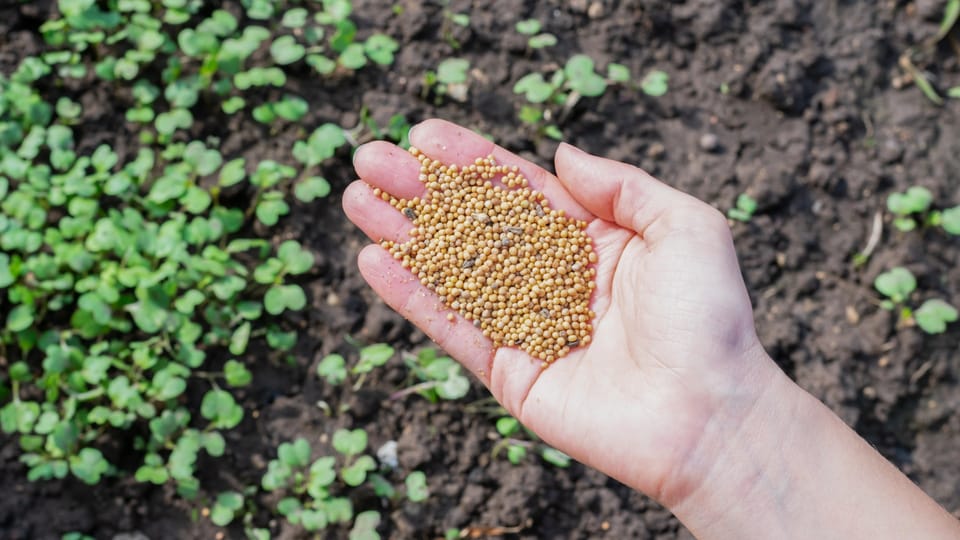
First, the mustard seed. It’s one of the smallest seeds his hearers know, yet it can grow into a large, tree-like shrub in a single season, providing perches for birds.. That image likely echoes Old Testament pictures (like Daniel 4) of a great tree providing shelter, hinting that God’s kingdom will outgrow and outlast the kingdoms of this world. The point is simple: small beginning, surprising outcome.
Then Jesus pairs it with the leaven. “The kingdom of heaven is like leaven that a woman took and hid in three measures of flour, till it was all leavened” (13:33). The leaven is small, almost invisible once it’s worked into the dough, but its influence is total. And the amount of flour is enormous—enough to feed a crowd. What starts hidden spreads quietly, steadily, and irreversibly from within.
Together, these parables speak to anyone discouraged by the kingdom’s apparent weakness. Yes, the kingdom can look small, slow, and easy to dismiss. But don’t let the smallness fool you. It grows, it permeates, and it will not be stopped.
So far, Jesus has told us to expect two things at the same time: Jesus’ kingdom is opposed, and it’s seemingly insignificant. Then:
Jesus’ kingdom is worth everything (13:44-46)
We’re going to look at two more parables in verses 44 to 46.
In the first, a man stumbles upon treasure hidden in a field. In Jesus' time, that situation was normal. There were no banks or safety deposit boxes. When danger came, people would bury their valuable items, sometimes never coming back to get them. So when this man finds the treasure, he hides it again, sells everything he has, and buys the field. It sounds extreme, until you see what he’s gaining.
The second parable makes the same point from a different angle. A merchant searching for fine pearls finally finds one of surpassing value. Unlike the man in the field, he isn’t surprised by accident. He’s reached the goal of a long, careful search. And his response is the same: he sells everything to obtain it.
The point is simple: the kingdom is worth everything you have. It’s so valuable that no sacrifice is too great, and no price is too high. Even when it looks weak and small, its worth is limitless.
As John Piper says:
The kingdom of God is so valuable that losing everything on earth, but getting the kingdom, is a happy trade-off. Having the omnipotent, saving reign of Christ in our lives is so valuable that, if we lose everything, in order to have it, it is a joyful sacrifice.
How Will You Respond?
So far, Jesus has told us three things: Jesus’ kingdom is opposed, seemingly insignificant, and worth everything. In this age the kingdom will be opposed, it will often appear small, and yet it is so supremely valuable that the only sane response is to give up everything gladly to have it.
And then Jesus tells two final parables that press the question on us: how will you respond?
In verses 47–50, Jesus paints a scene anyone near the Sea of Galilee would recognize. A fisherman casts a dragnet and pulls in a mixed catch until the net is full. Because a dragnet gathers everything, the sorting always comes later: the fishermen sit down, keep the good fish, and throw away the bad.
Jesus says the kingdom is like that. For now, the net is wide and the catch is mixed. But a day is coming when God will sort what is genuine from what is not, just as surely as wheat is separated from weeds, and good fish from bad. And that brings the question to us with weight and urgency: how will you respond?
Will you dismiss the kingdom because it looks small and contested? Or will you receive it as the greatest treasure, more valuable than anything else you could hold onto? How you answer really matters now, and it will really matter in the end. In fact, it determines everything.
Then Jesus turns and asks, “Have you understood all these things?” (13:51). Do they see why the kingdom meets such resistance? Do they grasp its surprising shape and surpassing worth, its small beginnings and its glorious end? Do they feel what’s at stake?
With maybe a little too much confidence, they answer, “Yes.” And then Jesus leaves one more story that calls for a response from them and from us:
And he said to them, “Therefore every scribe who has been trained for the kingdom of heaven is like a master of a house, who brings out of his treasure what is new and what is old.” (13:52)
Here’s what he’s saying: if you understand the Scriptures—both the promises of the old covenant and what Jesus has now revealed about his kingdom—don’t hoard that insight. Bring it out. Put it to use. Share it so others can see and understand, too.
What’s Jesus’ kingdom like? Right now, it’s heavily opposed, seemingly insignificant, and worth everything.
So respond. Respond by understanding what Jesus’ kingdom is like. Respond in faith and repentance to the good news of the kingdom while you still have time. And respond by helping others understand the surprising and glorious nature of Jesus’ kingdom too.
Sooner or later, you’re going to be surprised by what Jesus’ kingdom looks like. Jesus wants to help.
Don’t be surprised by the opposition. When you see weeds in the field—opposition, hypocrisy, suffering, and the stubborn presence of evil—don’t conclude the kingdom is failing. It’s supposed to be like this. Keep trusting that the Judge of all the earth will do right, and that the harvest is coming.
Don’t be surprised or discouraged by the smallness of the kingdom. The mustard seed and the leaven mean your faithfulness is never wasted, even when it looks hidden, ordinary, and unimpressive. Keep praying, keep serving, keep gathering with the church, keep speaking of Christ, keep doing the next right thing. The kingdom grows in quiet ways before it ever looks obvious.
Never question the value of Jesus and his kingdom. Jesus is not one treasure among many; he is the treasure. Respond with repentance and faith now, while the net is still being drawn in, while the invitation is still open.
And finally, don’t hoard what you’ve come to see. If you understand what Jesus’ kingdom is like—opposed, small, and priceless, then bring that treasure out for others. Speak it, teach it, model it, and pass it on. In a world confused by appearances, one of the most loving things you can do is help someone else see the kingdom clearly.
Jesus’ kingdom faces opposition, seems small, and is worth everything.