The Fruit of the Spirit (Galatians 5:19-21)
Big Idea: The Holy Spirit produces spiritual fruit in Christians who rely on him rather than on their own efforts.
You may recall that we began exploring the Holy Spirit some time ago. The Holy Spirit is an extraordinary gift, given to every believer at the moment of conversion. At that moment, we are baptized in the Holy Spirit, receiving spiritual power that transforms our lives. He fills us, purifies us, enlightens us, empowers us, preserves us, and equips us with spiritual gifts. One vital aspect not yet addressed is the fruit of the Spirit, essential to any discussion about the Holy Spirit.
God desires to lead us into a spiritual orchard, where the Holy Spirit produces fruit in our lives as we yield to his filling and control. However, this doesn’t happen automatically. Many Christians are indwelt by the Spirit but have yet to fully experience the richness of his work. If we are to live a victorious Christian life, we must grasp the person and ministry of the Holy Spirit. When he dwells within us, his presence begins to manifest in tangible ways, much like fruit appearing in an orchard. This fruit, known as the fruit of the Spirit, is the unmistakable evidence of his transformative influence in our lives.
But many Christians never experience the fruit of the Spirit. The Galatians are an example. See what Paul wrote to them:
O foolish Galatians! Who has bewitched you? It was before your eyes that Jesus Christ was publicly portrayed as crucified. Let me ask you only this: Did you receive the Spirit by works of the law or by hearing with faith? Are you so foolish? Having begun by the Spirit, are you now being perfected by the flesh? (Galatians 3:1-3)
The Galatians had made a serious mistake. They were trying to live the Christian life using the power of human effort. Through the power of the flesh. You don't have to be very smart to realize that this is a losing proposition. It is literally impossible to live the Christian life in the power of the flesh. If you try to lead a Christian life using your own best efforts and on your own strength, listen right now: you are doomed. There is no way for you to succeed.
The Bible teaches that the flesh refers to our human nature and its unregenerate weakness. According to the Bible, our flesh has inherited a sinful nature from Adam. We completely lack spiritual good before God, and we are totally unable to do any spiritual good before God. In other words, our efforts to please God by our own efforts in our own sinful nature are completely inadequate. The flesh cannot please God.
In Galatia, certain teachers misled believers into thinking that pleasing God meant controlling the flesh through sheer self-will and discipline. They replaced a vibrant relationship with the Holy Spirit with a rigid system of rules. Paul didn’t hold back, exclaiming, "You crazy Galatians! … Only crazy people would think they could complete by their own efforts what was begun by God." The truth is, it’s utterly impossible to live the Christian life through our own strength. We desperately need the Spirit.
The Spirit is better than the law, because as important as the law is, it only tells us what we're doing wrong. Have you ever been pulled over by a police officer for driving within the speed limit? The police officer stops you and says, "Good day. I just noticed that you were observing the speed limit, and I want to thank you for obeying the law." No, the laws and the police are only there to give you a hard time when you disobey the law. And it's the same way with the law of God. The law does not give us power to please God, it only points out when we're disobeying. But the Spirit helps us to please God.
Let's examine what occurs when we live without the Spirit's power and contrast it with the spiritual fruit produced when we embrace the Christian life through the Spirit's guidance.
The Deeds of the Flesh
Paul contrasts the sweet fruit of the Spirit with the dry, unsatisfying deeds of the flesh to build anticipation. Look at verses 19-21. These are the deeds of the flesh. These are the vices of the flesh. These are the mess we're in within the power of the Holy Spirit.
Tony Evans splits this list into three categories.
Moral Sins
Now the works of the flesh are evident: sexual immorality, impurity, sensuality,(Galatians 5:19)
Sexual immorality involves satisfying our sexual desires through either sexual contact outside the boundaries of heterosexual marriage or indulging in inappropriate sexual material. It’s what someone has described as “repetitive, loveless, cheap sex”—actions we instinctively know are wrong, whether in reality or in our thoughts.
The term "impurity" evokes the image of something oozing from a sore, symbolizing a thought life that is polluted and corrupt. It’s been aptly described as “a stinking accumulation of mental and emotional garbage.”
Sensuality, on the other hand, refers to a reckless, unrestrained lifestyle—a lack of self-control that leads to wild and undisciplined behavior.
Religious Sins
Second, you have not only moral sins but also religious sins: "idolatry, sorcery..." (Galatians 5:20).
Idolatry is worshiping other gods. I hope none of us have idols, but anything that replaces the place of God in our lives is an idol. It can include such things as worship of material possessions. We can even live in our idols or ride in them. They can be our cars, houses, or our bank accounts. And witchcraft refers to the practice of magic and involvement with forbidden practices such as spiritualism, fortune-telling, and astrology.
Social Sins
Third, you have social sins.
...enmity, strife, jealousy, fits of anger, rivalries, dissensions, divisions, envy, drunkenness, orgies, and things like these. I warn you, as I warned you before, that those who do such things will not inherit the kingdom of God. (Galatians 5:20-21)
This is the longest list: how we relate to others. You know, not many Christians take hits of crack cocaine to get high, but how many of us are guilty of outbursts of anger? How many of us experience characteristics of hostility, grudge-bearing, and less than loving thoughts? How many of us have disputes with our spouses or others? How many of us have what Paul calls selfish ambition? Not to mention drunkenness and the lifestyle of the wild party?
Okay, let's change the subject. This is getting a little too convicting. The deeds of the flesh include not just sexual and religious sins, but also anger and selfish ambition. These are what Paul identifies as the deeds of the flesh.
The Fruit of the Spirit
Having sampled the dry, rotten, and unsatisfying deeds of the flesh, let’s now step into the orchard brimming with the juicy, sweet, and deeply satisfying fruit of the Spirit. We will see evidence of the Spirit’s transformative work in our lives—fruit that is visible to others, not just for ourselves. This fruit blesses those around us and, as Bernard so aptly put it, has the power to "make their day."
Paul lists nine flavors of the fruit of the Spirit in Galatians 5, beginning in verse 22:
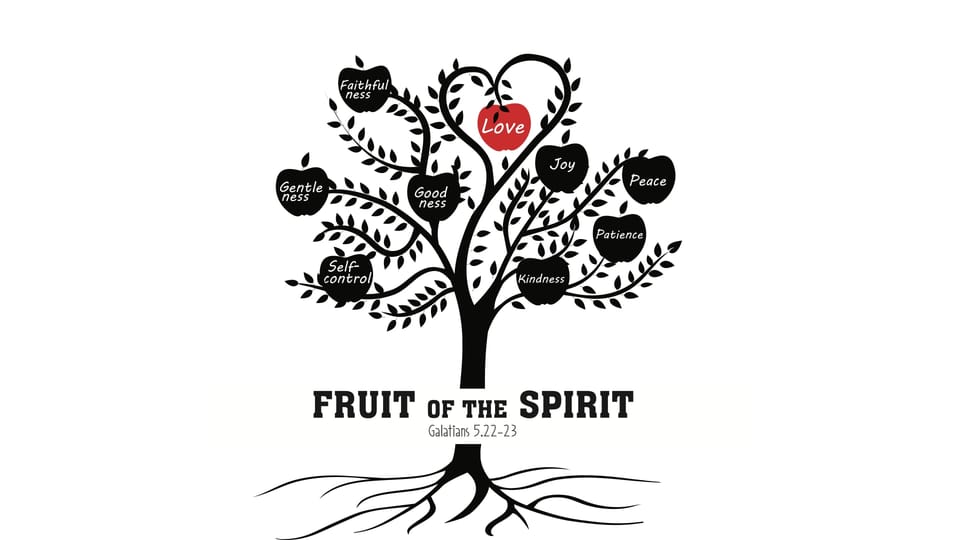
But the fruit of the Spirit is love, joy, peace, patience, kindness, goodness, faithfulness, gentleness, self-control; against such things there is no law. (Galatians 5:22-23)
For the rest of this message, let's examine the fruit of the Spirit in each of its flavors. This is the sort of quality that will be displayed in our lives as we submit to the Spirit. The fruit of the Spirit is uncommon and extraordinary.
Love
The fruit of the Spirit is love. This is a transcendent love that rises above commonplace natural affection. It is the ability to seek the highest good for other people, regardless of their response. It is selfless love, the ability to show love to even our enemies. Natural love says, "You aren't being loving to me, so I won't show any love to you." The Spirit says, "Even if you are not loving me, I will show you what real love looks like." Love transcends natural affection; it flows from a heart that has been changed by the Holy Spirit.
Joy
The fruit of the Spirit is also joy. This is not the joy that comes when our favorite sports team wins a title, or when something good happens. It is a joy that is transcendent and born of blessedness. Joy turns a bad situation into a playground; it is inner stability regardless of external circumstances. The joy of the Spirit pervades and penetrates the soul.
Peace
The fruit of the Holy Spirit is also peace. Peace is our inheritance from the Prince of Peace. It goes beyond any peace this world can offer. It is an inner peace, a peace that passes understanding. It is peace with God. It is peace with our brothers and sisters.
Patience
The fruit of the Spirit is also patience. The Spirit gives us a long fuse and removes a vengeful spirit from us. It mirrors the character of God, who has no explosive tantrums. God is slow to anger and endures the insult and malice of others. And God gives us this ability to be patient.
Kindness
The fruit of the Spirit is kindness. Jesus was strong and tender. He was not harsh; he never broke a bruised reed. Jesus kept his authority and power in check; he did not crush the weak. Instead, he was thoughtful and kind, tempering justice with mercy. The Spirit produces kindness in our lives, the ability to think of how we can help others.
Goodness
The fruit of the Spirit is goodness. Goodness refers to a basic personal integrity.
Faithfulness
And the fruit of the Spirit is faithfulness. The ability to believe in God and to be faithful and consistent in our lifestyle.
Gentleness
And the fruit of the Spirit is gentleness. The ability to be humble and to resist arrogance. To be graceful to others.
Self-Control
Lastly, the fruit of the Spirit is self-control. The Spirit gives us the ability to resist violence, crudeness, rudeness, and pushiness. Instead, we are self-controlled, moderate, able to resist wrong, and submit to what is right.
This is the fruit of the Spirit. These are the genuine marks of godliness, the virtues we see manifested in mature believers. These are the virtues that the Spirit cultivates in our lives, not arising from our own righteousness, but because, as Augustine put it, "God is pleased to crown his own gifts." We are incapable of displaying these gifts without the power of the Spirit.
How to Get the Fruit of the Spirit
How can we experience this spiritual harvest of fruit?
And those who belong to Christ Jesus have crucified the flesh with its passions and desires.
If we live by the Spirit, let us also keep in step with the Spirit. (Galatians 5:24-25)
The answer is that we give our lives to Christ and have our sinful nature crucified with Christ. That happens when we become believers. And once we become Christians, that we keep in step with the Spirit, and that we walk in line with the Spirit. This emphasizes the need for a life of reliance on the Holy Spirit, guided by prayer.
Listen to what Charles Stanley writes:
The Spirit-filled life begins once we are absolutely and thoroughly convinced that we can do nothing apart from the indwelling strength of the Holy Spirit…The Spirit-filled life begins with an overwhelming realization that we are absolutely helpless and hopeless apart from the empowerment of the Holy Spirit… [Until then], we will always be out there doing things for God in our own strength.
Let me ask you, have you reached that point of total dependence in your life? That without God's help, you can do nothing. We must continually surrender to the Spirit's control in our lives and give everything to him to be filled with the Spirit. Remember, to be filled with the Spirit means that we are controlled by the Spirit. In order to be controlled by the Spirit, we have to surrender everything to him.
One way to know if we are keeping in step with the Spirit is to look at our prayer lives. If we don't pray, we are leaving the Spirit out of our lives. But if we do pray, we know we are truly walking in step with the Spirit.
Friends, the Holy Spirit is not a nice addendum to the Christian faith. He is at the heart and core of it. If we are going to have our lives transformed, we can't do it on our own strength. We need the power of the Holy Spirit.
As we conclude this series, I urge you to seriously embrace the call to crucify the flesh along with its passions and desires. When we belong to Christ, our sinful nature is dealt a decisive blow—it no longer rules over us. But we must actively treat it as dead, refusing to give it life through compromise or indulgence. Whatever sins you struggle with, remember that they were nailed to the cross with Christ. Don’t administer first aid to them. Consider them dead and live in the freedom Christ has secured for you.
At the same time, we are called to keep in step with the Spirit. This means aligning our lives with his leading, much like marching in formation. Each day, we must intentionally choose to follow his guidance, focus on what pleases him, and trust in his power. As we do this, the Spirit produces his fruit in us, fruit that blesses others and glorifies God. Let’s commit to battling our desires and following the Spirit, trusting that he will change us from within.