Follow At All Costs
Big Idea: True discipleship means surrendering to God, dying to self, and trusting him to transform us through the power of the cross.
Today marks the final day of our 50-day spiritual adventure. Throughout this journey, we've been challenged to walk in Christ's steps, asking in every situation, "What would Jesus do?" We've been called to represent Christ's interests in our community. As we conclude this adventure, I understand that some may still be hesitant to fully commit to following Christ. This morning, I want to speak directly to you.
What I share today is not new or original. This summer, at a leadership conference, John Maxwell delivered a message titled "The Courage to Lead at All Costs." My goal this morning is to challenge you to follow Christ wholeheartedly, regardless of the cost.
When I read the Bible, I find it to be full of paradoxes. Jesus said that if I want to save my life, I have to lose my life. If I want to be lifted up, I have to humble myself; and if I want to be the greatest, I have to be a servant; and if I want to be first, I have to be last. If I want to rule, I have to serve; and if I want to live, I have to put to death the deeds of the body; and if I want to be strong, I've got to become weak. And if I want to inherit the kingdom, I have to be poor in spirit. And if I want to produce, I have to die.
In fact, Jesus said:
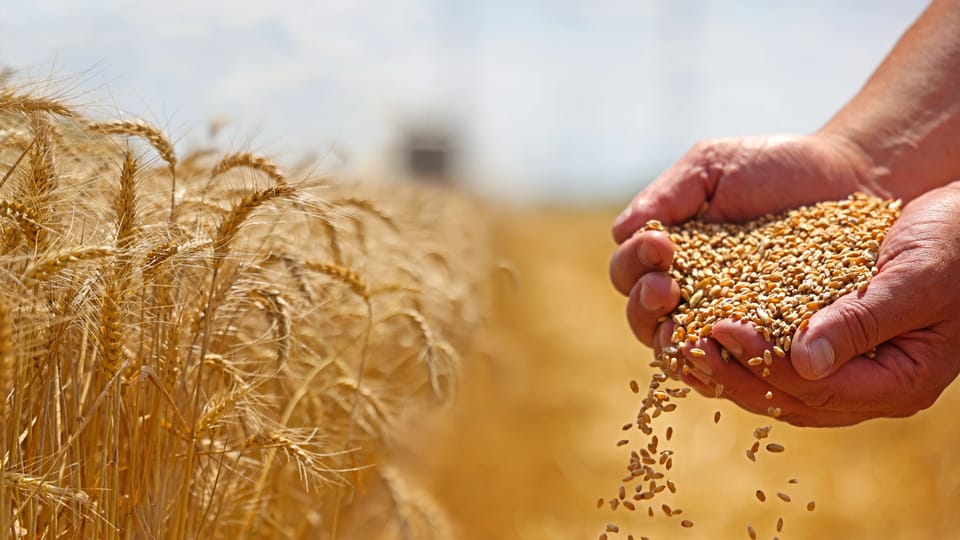
Truly, truly, I say to you, unless a grain of wheat falls into the earth and dies, it remains alone; but if it dies, it bears much fruit. Whoever loves his life loses it, and whoever hates his life in this world will keep it for eternal life. (John 12:24-25)
I Don't Have To Survive
If you'll allow me, I want to talk to you about death—not physical death, but the kind of death Jesus calls us to embrace. I want to explore the idea of "I Don't Have to Survive," becoming like the grain of wheat Jesus mentioned. This involves allowing God to guide us through a process of dying so we can experience true resurrection. I want to discuss brokenness—not the kind that defeats us, but the kind that God uses for our transformation.
There’s a profound difference between being broken and being beaten. When God breaks me, I find that in my brokenness, I still care deeply. When I'm beaten, I lose all interest. When I’m broken, I say, “I cannot, but God can.” When I’m beaten, I simply say, “I can’t.” In my brokenness, I can glorify God through my weakness. But when I’m beaten, I glorify no one.
Here’s the truth: God wants to break us in the right places. When we submit to him, he takes us through a process of brokenness and death that leads to life. If I try to break myself, I end up broken in all the wrong places. But when I allow God to do the breaking, he shapes me exactly as he intends.
I realize this message isn't popular. It’s not the kind of thing that makes us feel warm and comfortable. But I’ve never seen anyone do anything truly great for God without first going through this process. It’s the way of the cross.
In our journey, Good Friday always comes before Easter. The problem is, we love the resurrection—we love the life, the victory, the peace, and the growth. And those things are wonderful. But here’s the hard truth: before we can experience resurrection, we must first die. No cross, no Easter. And it’s in dying to ourselves that we find the life God has for us.
And now, behold, I am going to Jerusalem, constrained by the Spirit, not knowing what will happen to me there, except that the Holy Spirit testifies to me in every city that imprisonment and afflictions await me. But I do not account my life of any value nor as precious to myself, if only I may finish my course and the ministry that I received from the Lord Jesus, to testify to the gospel of the grace of God. (Acts 20:22-24)
The secret to the Apostle Paul's ministry is that he was not focused on survival. I mean, what are you going to do with Paul?
"Paul, we do not like the way you're preaching. If you don't stop preaching that way, we're going to throw rocks at you." "That's been done before."
"Oh, shut up, Paul. Quit planting churches. We're going to put you in jail." "Could I go back to the jail at Rome? I was witnessing to the guard the last time when they let me out."
"Paul, if you don't shut up, we're going to kill you!" "Would you please? I'm in this dilemma: to be absent from the body is to be present with the Lord, could you just knock me off."
What are you going to do with Paul? Nothing! Why? Paul doesn't have to survive. You can't kill a dead man.
On the back of my office door hangs a plaque with these words: "I Don't Have to Survive." I remind myself daily that my role is to make the right decisions, not just the easy ones. What God holds us accountable for is not comfort or convenience, but to do what is right, to live rightly, and to be right before Him. It’s not about manipulation or even motivation—it’s about surrender. It’s about reaching the point where we let go of self so that God can begin His transforming work in us.
When we come to that broken, "I don’t have to survive" place, something profound happens. It's a painful but necessary process that removes our self-reliance and allows God's power to work through us. My prayer is that God would raise up people in this church who are willing to live with that kind of surrender. People who are willing to follow Christ at any cost, trusting that by losing their lives, they will truly find them.
Biblical Examples
Let’s explore several Biblical figures who prioritized their survival:
- Abraham and Sarah, when they went to Egypt and Abraham lied to protect himself;
- Lot, when he divided the land with Abraham, choosing what seemed best for himself;
- Jacob, before he wrestled with the angel, relying on his schemes;
- The ten spies who returned from Canaan were overcome with fear. Solomon, who made alliances with nations instead of trusting God;
- The rich young ruler, who walked away from Jesus, clinging to his possessions;
- The man who buried his one talent, too afraid to risk obedience;
- Peter, who denied knowing Jesus to save himself;
- Caiaphas, the high priest, who clung to power at the expense of truth.
The list goes on.
When you look at these survivors, the cost of their choices is painfully clear. Ask Lot about the devastation of Sodom. Ask the ten spies about the forty years of wandering in the wilderness. Examine Solomon's life to understand the emptiness of a divided heart. Ask the rich young ruler about the sorrow of walking away from Jesus. The one-talent man could tell us about the Master’s wrath. And Peter—imagine the anguish in his heart as he met Jesus’ eyes after his denial.
But the Bible is also full of non-survivors—those who chose faith over fear, obedience over self-preservation. Abraham, taking Isaac up the mountain, declaring, "God will provide." Joshua, standing before Israel, boldly proclaiming, "Choose for yourselves this day whom you will serve. But as for me and my household, we will serve the LORD." Caleb, at 85, saying, "Give me that mountain." Job, in the depths of suffering, declaring, "Though he slay me, yet will I hope in him." David, facing Goliath, asking, "Is there not a cause worth fighting for?" Elijah, standing alone on Mount Carmel. Daniel, steadfast in the lion’s den. The three Hebrew children, refusing to bow to the golden image.
I love the courage of those three young men. When told to bow, they replied, "Oh, we understood."
If this be so, our God whom we serve is able to deliver us from the burning fiery furnace, and he will deliver us out of your hand, O king. But if not, be it known to you, O king, that we will not serve your gods or worship the golden image that you have set up. (Daniel 3:17-18).
And then there’s John the Baptist, who declared, "I must decrease, and he must increase." Or the widow who gave her two mites—everything she had. These are the ones who lived not to survive, but to glorify God, no matter the cost. Their lives remind us that true greatness comes not from clinging to safety, but from surrendering to God in faith.
What Keeps Us From Brokenness
Here are six factors that keep us in survival mode and hinder the transformative brokenness that God uses to help us grow.
The first is the relentless pace of life. We get so busy—too busy to care, too busy to invest in others, too busy to love. The stress of life hardens us, leaving us calloused and indifferent. We rush from one thing to the next, and in the process, we lose the tenderness that allows God to work in us.
The second is fear of vulnerability. We avoid transparency because it feels risky. C.S. Lewis captured this perfectly when he wrote:
To love at all is to vulnerable. Love anything and your heart will be wronged and possibly broken. If you want to be sure of keeping your heart intact, you must give your heart to no-one – not even to an animal. Wrap it carefully around with hobbies and little luxuries. Avoid all entanglements with others. Lock it up safely in the coffin or casket of your selfishness. But in that casket – safe, dark, motionless, airless – it will change. It will not become broken. It will become unbreakable, impenetrable, irredeemable. The only place outside of heaven where you can be perfectly safe from all the dangers of love is hell.
Vulnerability is frightening, but without it, we miss the beauty of being broken in the right way.
The third is immaturity. Immaturity resists brokenness because it clings to self-centeredness. When we are broken, we become childlike—trusting, dependent, forgiving, and teachable. But when we are unbroken, we become childish—demanding our rights and insisting on our way.
There’s a thin line between being childlike and childish, and too often we cross it. True growth in the Christian life comes when we give up our rights, embracing the servanthood that Jesus modeled. Leadership in God’s kingdom isn’t about power, it’s about surrender. Too many churches operate like country clubs with crosses on top, filled with people asking, “What’s in it for me?” But Jesus called us to be fishers of men, not keepers of the aquarium.
Most of us already know far more than we obey. I once heard a story about a man who gave 20% of his church’s budget. One day, he told the pastor, "I don’t like what’s happening here, so I’m withholding my tithe until things go back to the way they used to be." The pastor replied, "Don’t tell me, tell God—it’s his money. Let’s pray together. Repeat after me: 'God, I’ve decided to rob you.'"
The man quickly backed down. Immaturity and selfishness hold us back, but imagine what could happen if the sleeping people in the church woke up, if the lukewarm fired up, if the dishonest confessed, if the disgruntled sweetened up, if the discouraged cheered up, if the estranged made up, if the gossipers shut up, if the dry bones shook up, and if the non-givers paid up. That’s when we’d see renewal.
The fourth is isolation. When we distance ourselves from the world, we lose compassion for the lost. In Matthew 9, we see a powerful sequence in Jesus’ ministry: He went, He saw, and He felt. He went to the villages, saw the people, and felt compassion for them. Our problem is that we want to feel first, see second, and then go—if we go at all. But compassion comes when we step into the lives of others, not when we stay in our comfort zones.
The fifth is misplaced priorities. Someone once wrote:
I counted dollars while God counted crosses,
and I counted gains while He counted losses,
I counted my worth, my things gained in store,
and he sized me up for the scars that I bore.
I counted my degrees, and he counted the hours I spent on my knees.
I never knew until one day by the grave,
how vain are the things that we spend life to save.
When our priorities are out of alignment, we chase what is temporary and miss what is eternal.
The sixth is satisfaction. When our needs are met, we grow complacent. We become like the church in Laodicea—neither hot nor cold, just comfortable. There’s a prayer called “Disturb Us, Lord” that captures this perfectly:
Disturb us, Lord, when we are too well pleased with ourselves,
When our dreams have come true because we’ve dreamed too little,
When we arrived safely because we sailed too close to the shore.
Disturb us, Lord, when with the abundance of things we have lost our thirst for You,
When in loving time we have ceased to dream of eternity,
And in our desire to build on earth we have lost our vision of Heaven.”
We need to let God disturb us, to shake us out of our comfort and into His purposes. Brokenness is not easy, but it’s necessary. It’s the path to renewal, transformation, and the kind of life that glorifies God.
Follow At All Costs
Every one of us needs to come to a point in our lives when we quit playing games with God. And we say, "Okay, God, I'm getting on the operating table, and I want you to work on me, and I'm not going to get off until you're done."
God wants to take a whole bunch of us and turn us into men and women of God. Who go out with a heart for people. And we'll become people who don't have to survive. And who will follow at all costs.
I pray that God inspires people in our community to become devoted followers of Christ. Let's determine to be men and women of God.
Let me close with some words from In His Steps:
If our definition of being a Christian is simply to enjoy the privileges of worship, be generous at no expense to ourselves, have a good easy time surrounded by pleasant friends and by comfortable things, live respectably and at the same time avoid the world’s great stress of sin and trouble because it is too much pain to bear it – if this is our definition of Christianity, surely we are a long way from following the steps of Him who trod the way with groans and tears and sobs of anguish for a lost humanity; who sweat, as it were, great drops of blood, who cried out on the upreared cross, ‘My God, my God, why hast thou forsaken me?’
Are we ready to make and live a new discipleship? Are we ready to reconsider our definition of a Christian? What is it to be a Christian? It is to imitate Jesus. It is to do as He would do. It is to walk in His steps.
The gospel is the heart of everything we’ve been talking about. It’s the good news that Jesus Christ came to do for us what we could never do for ourselves. He lived the perfect life we couldn’t live, died the death we deserved, and rose again to give us new life. The paradoxes we’ve explored—dying to live, losing to gain, surrendering to win—are all rooted in the cross. Jesus didn’t just call us to take up our cross, he took up his first. He bore the weight of our sin, our failures, and our brokenness so that we could be made whole.
This is the invitation of the gospel: to stop striving, stop surviving, and come to Jesus in surrender. It’s not about earning his love or proving our worth. It’s about receiving his grace, freely given, and letting it transform us from the inside out. When we die to ourselves, we find life in him—life that is abundant, eternal, and full of purpose. So today, as we conclude this journey, the question isn’t just, “What would Jesus do?” but, “Will I trust him enough to follow where he leads?” The cross is the way, but it’s also the promise: through death comes resurrection, and through surrender comes life.
Adapted from a message by John Maxwell