Piercing the Darkness
Big Idea: Christians are called to confront evil and injustice, empowered by the gospel to transform the world.
Today is day 36 of the 50-Day Adventure Journal, and this week’s assignment might be tougher than usual. We’re focusing on representing Christ's interests in our community by engaging with our surroundings and identifying the good and the broken.
Last week, our task was to seek the Lord's guidance in expressing concern about an issue in our community that we think troubles Jesus. See the community from Jesus' perspective. If something troubles you, ask him for the strength and courage to share your concerns.
But this week's assignment is even tougher. It's this: Ask the Lord to help you plan how you can challenge the evil you've identified. How would he have you express his righteous anger in this situation?
This morning we won't talk about Thanksgiving in the message. Instead, I want us to think about confronting evil in the community.
And they came to Jerusalem. And he entered the temple and began to drive out those who sold and those who bought in the temple, and he overturned the tables of the money-changers and the seats of those who sold pigeons. And he would not allow anyone to carry anything through the temple. And he was teaching them and saying to them, "Is it not written, 'My house shall be called a house of prayer for all the nations'? But you have made it a den of robbers." (Mark 11:15-17)
We don't usually think of Jesus doing this sort of thing. We sing about "gentle Jesus, meek and mild." We don't think about Christ physically confronting that which is so offensive to him.
In those days, everyone had to pay a temple tax, typically during Passover season. People brought all sorts of coinage, because unlike today, all sorts of coinage was used for everyday purposes. When you visited the Temple, you had to pay the Temple tax with coins that did not bear the king's head, as Jews considered such coins to be graven images. Money changers exchanged coins but charged each pilgrim the equivalent of a day's wage for the service.
Additionally, you would present an offering. You could buy a dove outside the Temple, but inspectors there would always find flaws in animals purchased elsewhere. So instead, they said, "Just buy one from our Temple stalls. They have already been inspected." Outside the Temple, a dove cost a day's wages, but inside, it was 45 day's wages.
Jesus was furious and expelled the money changers and cattle dealers from the Temple because they had turned the only area for Gentiles into a corrupt marketplace. Jesus knew that his bold act would challenge the Jewish leaders, despite temporarily gaining the support of the crowds. Yet, he knew this was the path leading directly to the cross.
If Jesus were in Etobicoke today, what would he do? What abuses would he not tolerate? If we are to follow in Jesus' footsteps, we had better confront evil in society where it exists. Mind you, it will be costly. But the real question is: did Jesus save your soul just for your own benefit, or does he expect you to have an impact on those around you and the world?
In his excellent book The Road to Reality, K.P. Yohannan of India, the president of Gospel for Asia, writes: "
I'm convinced the main reason why we are not impacting our generation for Christ is our refusal to be honest with Christianity. We have offered the world a gospel without sacrifice and suffering. We've done everything we can to apologize for Christ's demands and explain them away. We've told people that Jesus didn't really mean what He said – that they can have Christ without His cross. The result is around us. We have apologetic, defensive, shallow Christians whose faith can't turn the next corner, let alone turn the world upside down.
What does it look like when a Christian confronts evil? Dennis Shere was publisher of the Dayton, Ohio Daily News. The Dayton Gay and Lesbian Center asked a newspaper to advertise a speaker series about health issues and support services for lesbians and gay men. Shere rejected the ad and was fired.
He explains:
I have been dismissed for refusing to run advertising from the homosexual community. I was told I could remain as publisher if I would adjust my position on this issue. In the past, I have tried to balance my Christian perspective with the demands of running the newspaper. I have compromised where appropriate without violating my principles. My conscience and concern for the community would not allow me to compromise on the issue.
What would Jesus do if he were publisher of the Dayton, Ohio Daily News? Would he accept an advertisement advertising gay and lesbian services? Do they have a right to expression, too? What is our responsibility to our employers? What would Jesus do? What would you do?
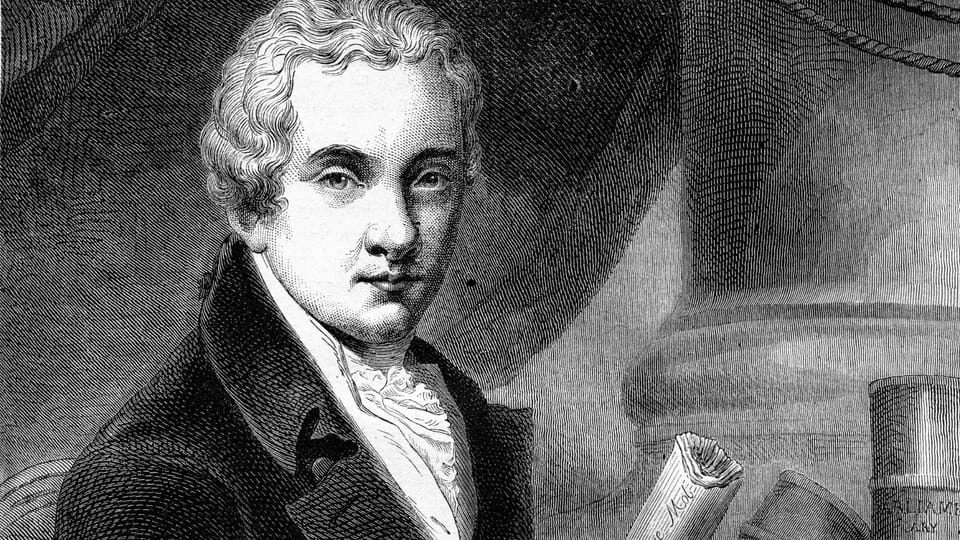
William Wilberforce was the only son of prosperous merchant parents. After his graduation from Cambridge, he was elected to the Parliament of England in 1780. At that time, corruption was so common that many Parliament members readily accepted bribes for their votes from slave traders.
In 1785, Wilberforce became a Christian and met John Newton, a former slave trader and author of "Amazing Grace." Few witnessed the horrors of the slave trade directly. People were captured during tribal wars, imprisoned, or simply kidnapped. They were enslaved and held in a stockade on the African coast until sold to the highest bidder.
After being purchased, they were branded and rowed to the waiting schooner. Their cries were disregarded by the sailors who hoisted them aboard and chained them in the filthy hold, with 500 African men and women packed tightly together. The crew of the ship would often help themselves to whatever slave women they chose. Weeks into the voyage, many slaves died, and each morning, dead or dying bodies were thrown overboard for the sharks.
Survivors of the three-month journey were auctioned naked in the marketplace to planters, who would work them to death on Caribbean plantations. Never again would these African men and women see their homeland.
On a foggy Sunday morning in 1787, Wilberforce sat at his desk and asked himself: did God save him only to rescue his own soul? He concluded that if Christianity was true and meaningful, it must go deeper than that. It must bring God's compassion to the oppressed as well as oppose the oppressors.
His mind was haunted by images of slave ships filled with people leaving Africa, leading him to write in his journal: "Almighty God has set before me two great objectives: the abolition of the slave trade and the reformation of manners."
In 1788, while sick, he persuaded the Prime Minister to present a bill for the abolition of slavery in the House. And thus began the fight. One man angrily cried out, "Things have come to a pretty pass when religion is allowed to invade public life."
Working day and night for abolition, his attempts failed in the House in 1789 and 1791. In 1792, he realized that they were not going to win the battle in the House, but in public opinion. He soon brought 519 petitions to the House of Commons for the complete abolition of the slave trade, signed by thousands of British citizens. Backed into a corner, the House passed Wilberforce's motion to ban slavery, but not before they added the word "gradually." And not too long after, they defeated Wilberforce's motion again.
Year after year, Wilberforce doggedly re-introduced his motion, and each year Parliament threw it out. In 1796, it seemed likely the measure would pass, but on the night of the vote, a dozen supporters missed Parliament for the opera, resulting in Wilberforce losing by just four votes. And so it went – 1797, 1798, 1799, 1800, 1801, and on.
In 1804, the House of Commons approved his motion with a vote of 124 to 49, but the House of Lords postponed the bill until the next session. In 1805, the House of Commons reversed itself, rejecting the bill by seven votes.
In 1807, the bill passed the House of Lords and was sent to the House of Commons. One by one, members jumped to their feet to decry the evils of the slave trade and to praise the men who had worked so hard to end it. During the climax of the debate, Sir Samuel Romilly passionately honored Wilberforce for his years of hard work. And the entire House rose, cheering and applauding.
Realizing that his long battle had come to an end, Wilberforce sat bent in his chair, his head in his hands, tears streaming down his face. The motion carried, 283 to 16. Years of illness, defeat, and ridicule had taken their toll on Wilberforce. But as he left the House, he turned to a friend and said, "Well, Henry, what do we abolish next?"
He fought for 18 more years for the total emancipation of slaves and continued advocating for prison, poverty, and workplace reforms. On July 29, 1833, just three days after the House of Commons passed the second reading of the Bill for the Abolition of Slavery, Wilberforce died, marking the end of slavery. "Thank God," he whispered before he slipped into a final coma, "that I should have lived to witness a day in which England was willing to give twenty million sterling for the abolition of slavery."
One excellent Wilberforce biography is aptly titled God's Politician. And truly he was, holding his country to God's standard of moral accountability. His relentless campaign to end the slave trade in the British Empire illustrates the impact a believer can have when confronting corruption in earthly systems.
What about you? Must I be carried to the skies on flowery beds of ease while others fought to win the prize, and sailed through bloody seas? Are there no foes for me to face? Must I not stem the flood? Is this vile world a friend to grace, to help me on to God?
God could be calling some of you to action this morning. The question Wilberforce faced was this: Did God save him only to rescue his own soul? Or did he save us so that we could make a difference to others?
There may be someone here today who feels compelled to take a stand on an issue like abortion, much like Wilberforce did in his time. Perhaps someone is burdened to address the presence of pornography in his or her community.
This morning, as we consider how to confront evil in our community, we must remember the gospel, which is the foundation of our faith and our source of courage. Jesus didn’t just confront evil in the Temple, he confronted the ultimate evil—sin itself. And he did so not with mere words or symbolic actions, but by offering his life as a sacrifice for us. His righteous anger in the Temple revealed his true mission: to redeem the broken world and reconcile sinners with God.
The cross is where Jesus confronted the greatest injustice of all. He bore the penalty for our sin, taking the judgment we deserved, so that we could be forgiven and set free. His resurrection demonstrated victory over sin, death, and evil, showing that no power can resist God's redeeming love. This is the gospel: that while we were still sinners, Christ died for us (Romans 5:8). And this gospel changes everything.
We confront evil in our community not from self-righteousness, but as individuals changed by grace. We take action because our Savior embraced the world's brokenness to offer hope and healing. Our mission is not just to oppose what is wrong but to point people to the one who makes all things right.
So, as you consider the evil that troubles you, remember this: Jesus has already won the ultimate victory. The power to confront injustice doesn’t come from us, it comes from him. And the goal isn’t just to change systems or behaviors—it’s to lead people to the cross, where true transformation begins.
What would Jesus do? He would act with courage, compassion, and a heart fixed on the glory of God. And he calls us to do the same, not in our own strength, but in his. The question isn’t just, “What will you do?” but, “How will you let the gospel shape your response?”
Let’s pray. Lord, thank you for the gospel—the good news that Jesus has conquered sin and death and offers us new life. Help us to live as people transformed by your grace, confronting evil not with pride but with humility and love. Give us courage to act, wisdom to discern your will, and hearts that reflect the compassion of Christ. May our actions point others to the hope and redemption found in him. In Jesus’ name, Amen.